
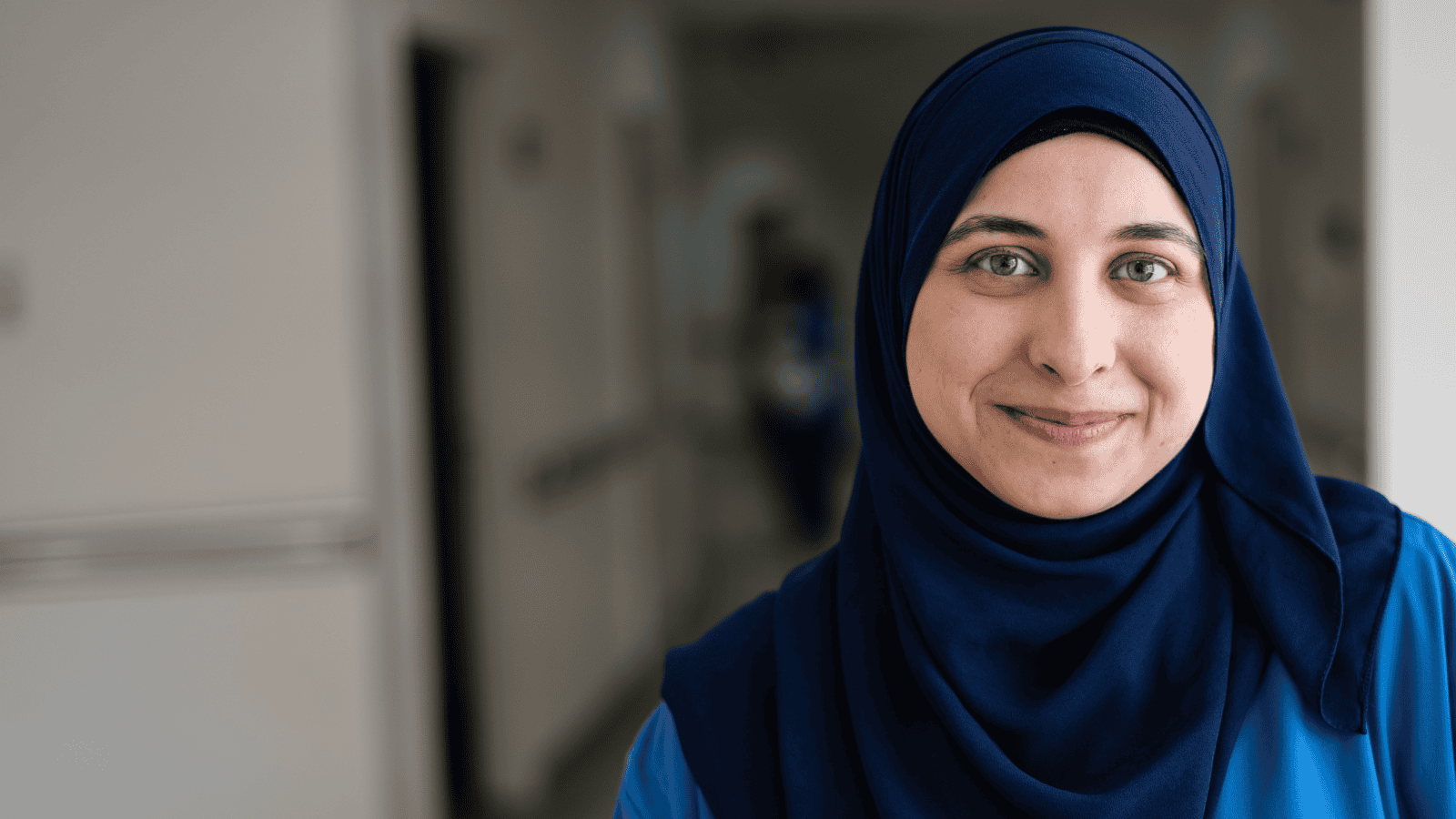
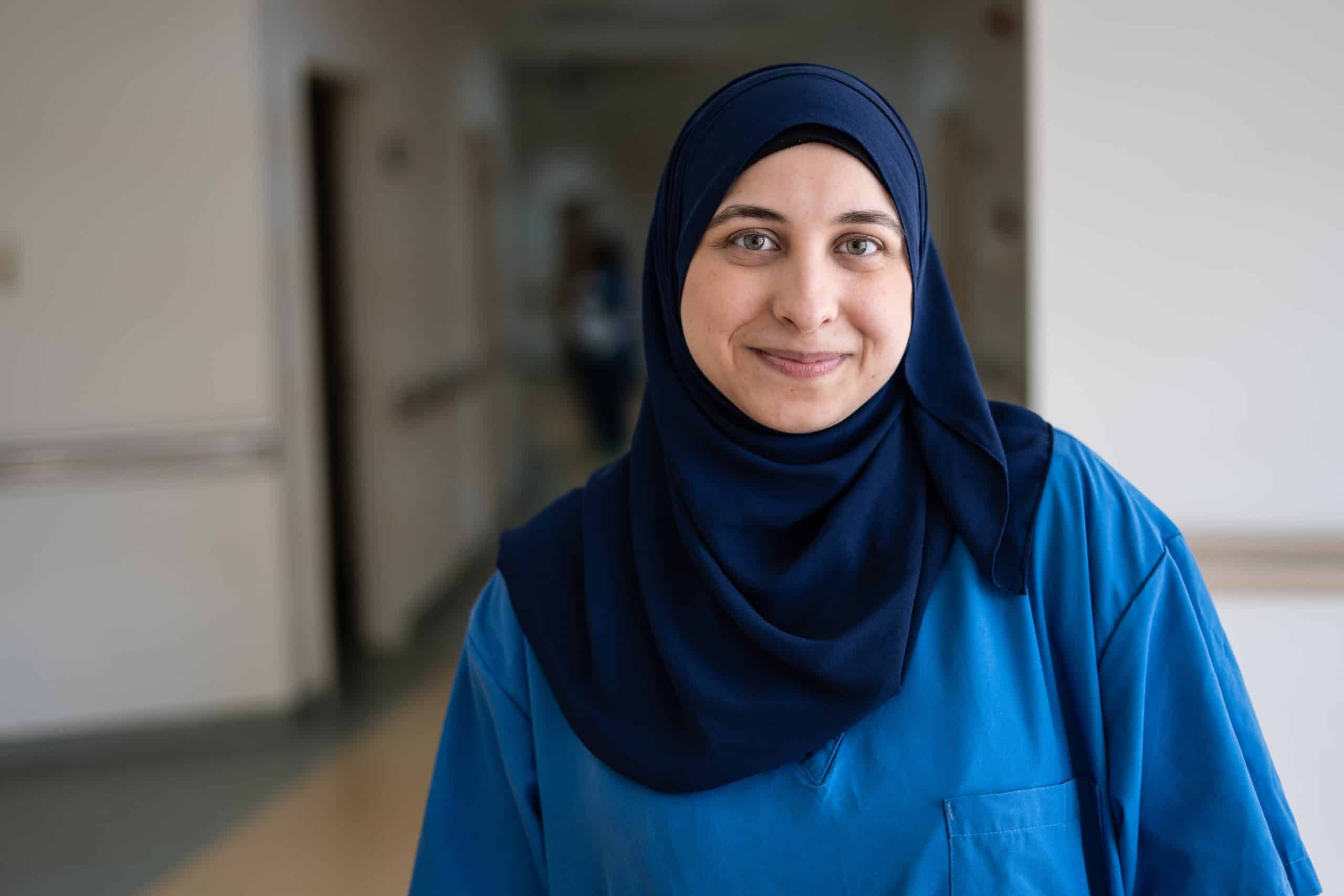
Aide was out shopping for groceries with her mother on her day off from working as a nurse at the Turkish Hospital in Saida, southern Lebanon. They separated briefly, her mother wanted to get some bread from a shop across the road. Aide continued to pick up food for the family in the market. After a short while, Aide was concerned her mother hadn’t yet returned, so she called her mobile phone — a stranger answered.
He quickly explained that her mother had been hit by a motorcycle whilst crossing the road and was badly injured. Panicked, Aide ran to where her mother was lying on the road.
The collision had fractured her hip and broken her ankle. What no one yet realised was that she also had a bleed on the brain and fluid leaking into her chest cavity.
Paramedics rushed mother and daughter to the hospital where Aide herself worked — only minutes away.
Soon after arriving at the emergency department, the situation escalated dramatically.
“A short time after my mother and I arrived at the hospital the airstrike happened at the café. Suddenly the department was very busy from the mass casualty incident”
While doctors assessed her mother and arranged urgent scans, patients injured in the airstrike began arriving in large numbers.
Aide was caught between two worlds — a worried daughter waiting for news, and a nurse whose colleagues urgently needed support.
Returning to duty
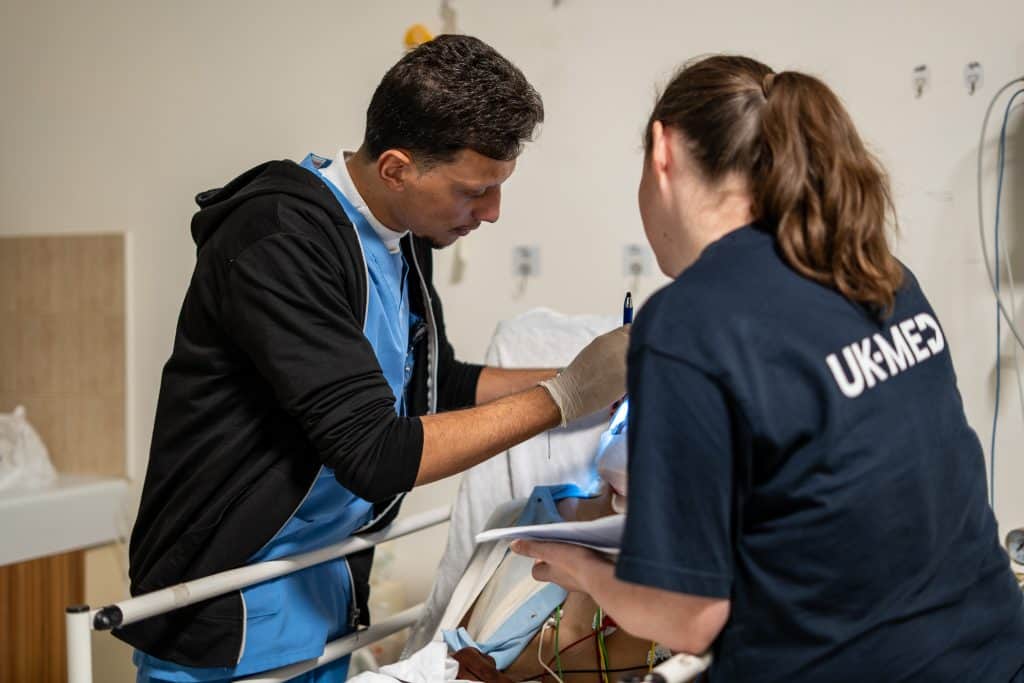
Despite the personal crisis unfolding around her, Aide started assisting with incoming casualties, some in severe conditions, with two heartbreakingly dead. Someone had a piece of glass embedded in the side of their head, while others suffered from severe traumatic injuries. Whenever she could pause, Aide checked on her mother — before returning to wound cleaning, dressings and fetching medicines for the growing number of patients from the airstrike.
Training into practice
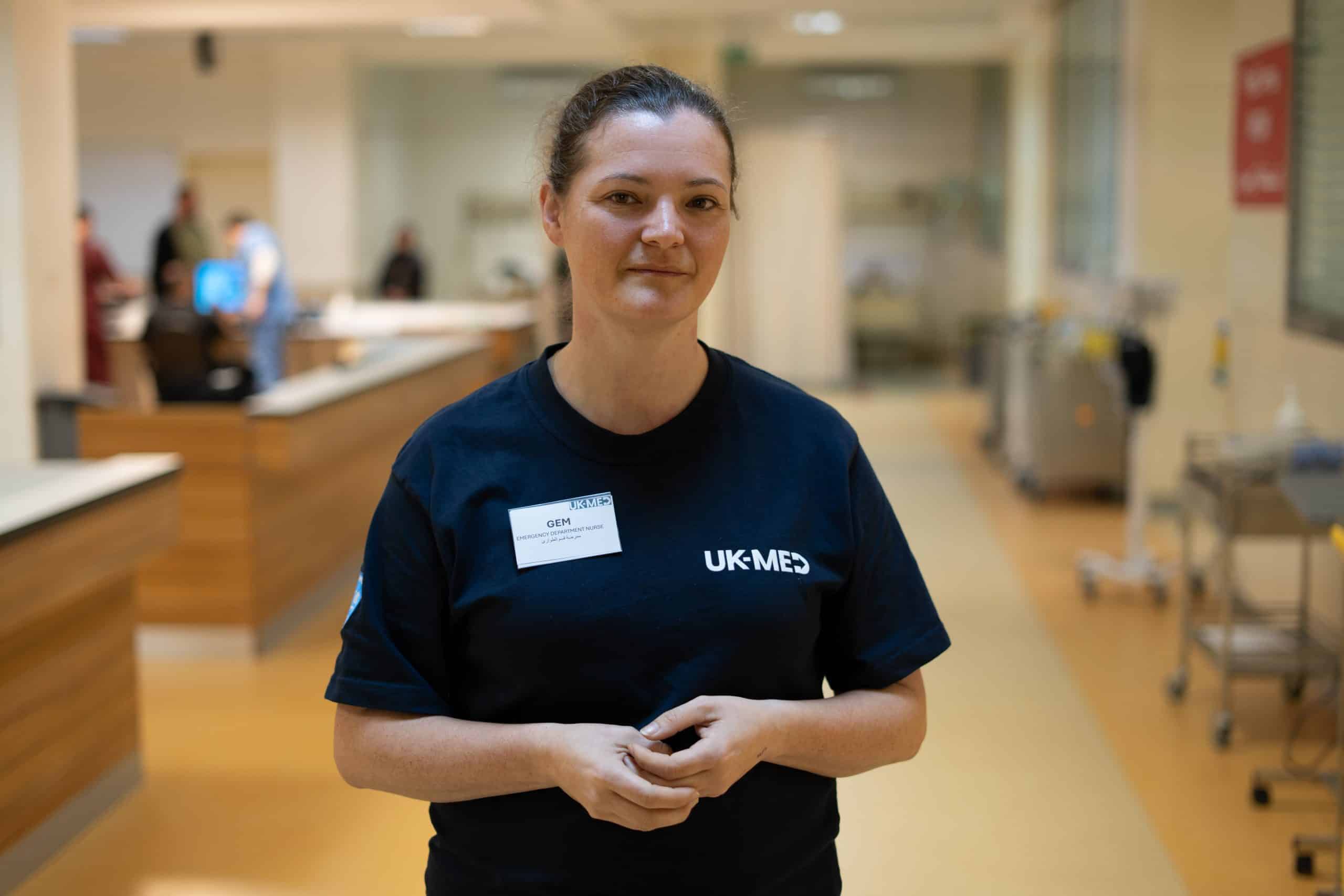
UK-Med staff, who had been working alongside the hospital team for several weeks, were also present in the emergency department. Their work focussed on skills exchange and training to help staff prepare for mass casualty incidents and sudden surges of patients — exactly the situation now unfolding.
“The team have been great. We’ve assessed where the department’s needs are and adapted training to suit the areas they may need refreshing or learning in the current context” (Gem, UK-Med Emergency Nurse)
Amid the staff rushing from patient to patient and families searching for their loved ones, national and UK-Med medics worked side-by-side to deliver life-saving care. Trauma training sessions delivered only days earlier were now being put into practice by staff —, some of whom were seeing their first casualties of conflict.
As patients were stabilised and the immediate pressure of the situation slowly eased, Aide was finally able to check in on her mother.
This time, there was good news.
The bleeding on the brain had been stopped, fluid was being drained from her chest, and she was stable enough to move to the wards.
The relief for Aide and her family was immense, after an exhausting and emotional day, which had impacted everyone in the area.
Still learning, even in crisis
Rather than going home to relax, Aide learned that a UK-Med training session was taking place nearby in the hospital. Wanting to remain close to her mother while continuing to develop her skills, she chose to attend
“I like to keep learning, growing and expanding my knowledge”
Incredible nurses, like Aide and her colleagues, form a vital part of emergency healthcare around the world. In Lebanon, UK-Med is working with hospital staff in the south prepare for mass casualty incidents, such as the one Aide was found herself in.
In an uncertain world, ensuring staff at every level are equipped with the skills, knowledge and confidence to respond is essential – helping save lives when it matters most.